Product FAQ's
1. What are the typical applications of Solid Carbide Counterbores?
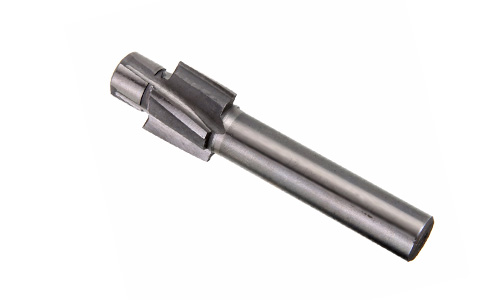
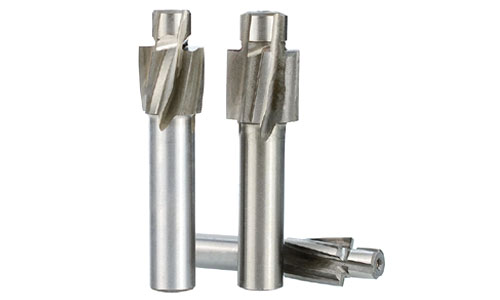
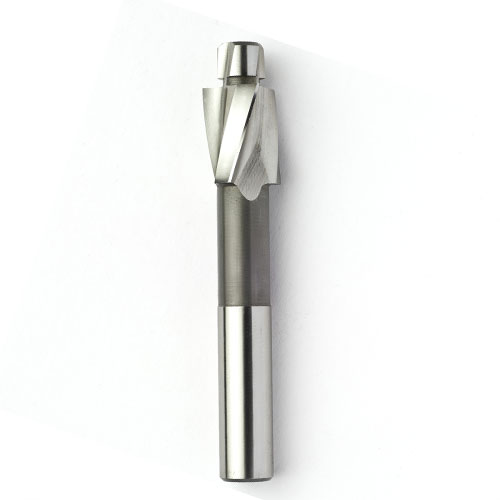
Solid Carbide Counterbores are commonly used for counterboring holes for socket head cap screws, spot facing operations, and creating flat seating surfaces for fasteners, ensuring accurate component assembly in industries such as automotive manufacturing, aerospace machining, and general engineering production.
2. How does a pilot help in counterboring operations?
The pilot in a Solid Carbide Counterbore fits into the pre-drilled hole and guides the cutting tool during machining, ensuring proper alignment, reducing tool vibration, and helping produce precise concentric counterbored holes with improved dimensional accuracy and smooth surface finish.
3. Why is chip evacuation important in Solid Carbide Counterbores?
Efficient chip evacuation prevents chip accumulation during machining operations, which reduces cutting friction, prevents tool overheating, and ensures smoother counterboring performance, allowing Solid Carbide Counterbores to deliver consistent machining results in high-speed production environments.
4. Are Solid Carbide Counterbores suitable for high-precision machining?
Solid Carbide Counterbores are highly suitable for precision machining because carbide material provides excellent dimensional stability and cutting accuracy, enabling the tool to create uniform counterbored holes with tight tolerances required in advanced engineering and manufacturing applications.
5. How does shank diameter affect machining stability?
The shank diameter of a Solid Carbide Counterbore affects machining stability by ensuring secure tool clamping in the machine holder, reducing vibration during cutting operations, and providing better rigidity, which helps achieve accurate counterbored holes and consistent machining performance in industrial applications.
6. How can a Solid Carbide Counterbore be customized for specific machining requirements?
Dedicated Impex manufactures Solid Carbide Counterbores according to customer drawings and machining requirements, including customization in cutting diameter, pilot size, overall length, shank diameter, flute design, and coating options, ensuring compatibility with specialized industrial machining applications and precision engineering needs.
7. In which countries do you supply Solid Carbide Counterbores?
DIC supplies Solid Carbide Counterbores to customers in countries including the USA, Germany, Italy, Turkey, UAE, Saudi Arabia, Qatar, Dubai, Oman, Canda, New Zealand, Italy, Singapore South Africa, and several Asian and European markets, supporting global machining industries with precision carbide cutting tools.
8. Can Solid Carbide Counterbores be used for repetitive production machining?
Yes, Solid Carbide Counterbores are ideal for repetitive production machining because carbide material offers excellent wear resistance and cutting stability, allowing the tool to maintain consistent machining accuracy and reliable performance during long production cycles in industrial manufacturing environments.
9. Why is tool rigidity important in Solid Carbide Counterboring operations?
Tool rigidity is important because it minimizes vibration and deflection during machining operations, allowing the Solid Carbide Counterbore to maintain stable cutting conditions, produce accurate hole geometry, and deliver consistent machining performance in precision engineering and industrial manufacturing applications.
10. How does a Solid Carbide Counterbore improve hole finishing quality?
Solid Carbide Counterbore improves hole finishing quality by producing precise flat-bottom recesses with smooth surface finish, ensuring proper seating of fasteners, reducing assembly errors, and providing consistent machining accuracy in automotive, aerospace, heavy engineering, and precision component manufacturing industries.